
Bad Bishops

We all know a bad bishop when we see one. It’s a sight you cannot possibly miss.
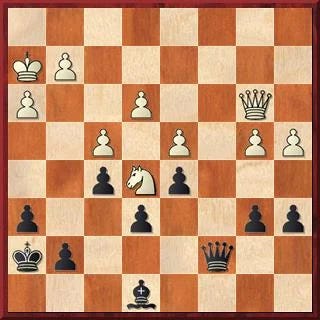
This is a typical case. It cannot be worse than this.
And yet the position is completely equal.
The obvious factor in Black’s favour is the active queen, but even without queens the position would be a draw - White cannot break through.
In spite of being equal, it is difficult to imagine White losing this position. He is, after all, dominating, even if visually. Just to spur your curiousity I’ll just say that in 6 moves Black delivered mate on g2 with the help of the bishop from f1.
Now go and check the game Farago- Donner from Amsterdam 1979.
There is a saying that bad bishops defend good pawns. An example is the whole opening called French Defence, where the bad light-squared bishop defends the vitally important e6-pawn. Another saying is that even the worst bishop is better than a knight.
So how bad are the bad bishops? As everything in life, it all depends, but I have a feeling that in closed positions the bishops have more life in them than what they are usually credited with. Even when completely dominated by a knight, like in the above example, they are not completely hopeless.
The bishop is more likely to be hopeless when limited by pawns rather than dominated by a knight. Here’s the position after only 20 moves from the game Miles-Smyslov from Dortmund in 1986. Black is lost as his bishop can never enter the game.
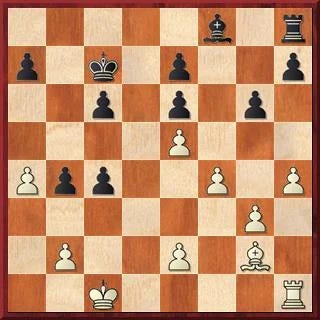
Curiously enough, Miles had few more games on the same theme. See for example the final position from his game against Ulf Andersson in Wijk aan Zee in 1981.
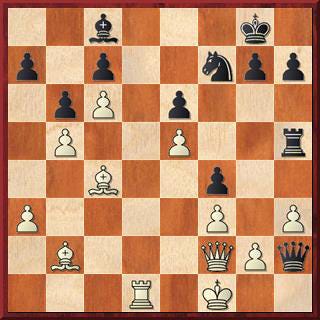
Or this position from his game against Ribli from Tilburg in 1978. After he boxed in the bishop on a8 White shifted the play to the kingside where he won the game.
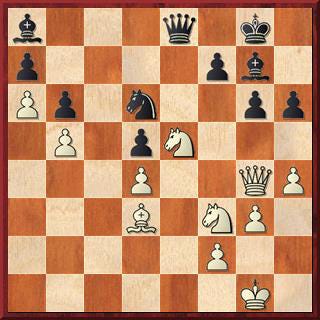
So the bishops can be bad, but that doesn’t happen too often. Which means that you can probably (and here the key word is probably) play the French Defence.
P.S. The video today also features bishops. On the surface, both of them were good ones, but they ended up with different fates. It also features a strangulation by Viktor Korchnoi. Korchnoi was a “space man”, he loved playing with space and in the game he uses it masterfully to win against Robert Huebner in the last round of the Leningrad Interzonal in 1973. It’s a game I analysed using The Method and I present it in such way, without engine lines or insights, giving you a pure human understanding of what happened. Check it out and see Korchnoi play at the height of his powers.